
This year marks the 750th anniversary of Dante Alighieri’s birth

The other day, while shopping in Tesco, I was surprised to find copies of the Inferno for sale by the checkout. “Oh dear”, I declared, “who would have thought of finding Dante here?” It was not Dante, but Dan “Dante” Brown, whose latest extravaganza, Inferno, tips a nod to the Florentine poet’s medieval epic of fire and brimstone.

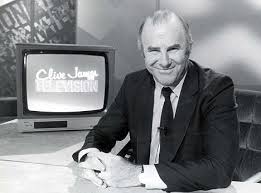
Dan Brown’s Inferno, a bibliographic thriller in the Umberto Eco mould, is one of the fastest-selling novels of the moment. But let us be clear. Where Dante’s Inferno was “awful” in that archaic sense of the word (still valid in Italian) of inspiring awe, Brown’s Inferno is merely awful. Correction: Very awful. Still I would rather read Dan Brown’s version of Dante than Clive James’s version of Dante.


First of all, do we really need James’s translation of Dante? At least fifty English versions of ‘The Inferno’ – the first part of Dante’s medieval epic The Divine Comedy – appeared in the 20th century alone. ‘The Inferno’ remains one of the most popular books of all time. Few translators have been brave or mad enough to take on ‘Purgatory’ and ‘Paradise’ as well: Dante’s three-part narrative of sin and salvation is over 14,000 lines long. J.G.Nichols’s recent verse translation of the Comedy managed to sustain the stabbing beat and great lyric beauty of the original, yet it attracted almost no reviews.
So now we have another Comedy, by an Australian-born polymath and former TV personality. Like Nichols before him, Clive James has chosen not to work within the fiendish triple rhyme of Dante’s terza rima. Dante’s tercets are especially difficult to translate because not a single word in them is unjustified; they allow little room for error. Many poets (among them Lord Byron, Elizabeth Barrett Browning and Leigh Hunt) have nevertheless found Dante’s triple-rhyme a stimulus rather than a deterrent, and produced translations of cadenced tautness and enduring vigour.
James, instead, has opted for rhymed quatrains. Shakespeare liked his quatrains, but they remain hostile to the Comedy’s tripartite design and Dante’s Trinitarian Catholic theology as reflected in his use of tercets (trinitas, Latin for “three”). If Dante’s 750-year-old epic speaks to our present condition, it is because Dante wrote the epic of Everyman who sets out on a symbolic three-part pilgrimage – Inferno, Purgatorio, Paradiso – towards salvation. T.S.Eliot, by attempting terza rima in “Little Gidding”, kept faith with a Dantescan spirit of trinity and triplet in a way that James does not, or is unable to.
Victorian translators in particular tended to reduce Dante’s crystalline tercets to a pious fustian devoid of vigour. Beatrice, typically, was a “blessed damozel” and “dew-eyed” allegory of divine grace. James, too, plumps out his translation with fusty-sounding words (“whereat”, “whomever”, “aught else”, “folderol”, “yonder”), which give the impression that Dante wrote in an antique Italian, when he did not. In order to reach the widest audience, Dante wrote in a “sweet new style” of vernacular Italian. His overthrow of Latin preceded Geoffrey Chaucer’s by eighty years.

In the Clive James version, Dante’s vernacular is approximated by slangy phrases such as “chilled with the shakes”, “Enough said” and “cosy perks”. Rather than work with the rough grain of Dante’s speech, these recall the glib and clever tongue of Clive James the media punter.
Recast in quatrains, James’s Comedy is something of a grind to read, with little sense of a through-narrative or drive. Clichés cling like grime to the dense pentameter lines (“cheek by jowl”, “dubious privilege”, “vaulting pride”), and there are other infelicities. The Latin poet Virgil is referred to throughout as Dante’s “Escort” (even, at one point, as a Mafia-like “man of honour”), as if Virgil was the Florentine poet’s courtesan, rather than his guide through hell and beyond.
In his introduction, James upbraids Dorothy L Sayers for her 1949-1962 Penguin Classic translation of Dante. (The detective novelist had “simultaneously loaded her text with cliché and pumped it full of wind”.) Yet it was Sayers who first put the fizz back into the Florentine by resolutely trimming her translation of all Victorian-sounding distortions, expurgations and literalisms; her Comedy was at least a spirited rehabilitation of the original, which is more than we can say for the Clive James Version.