
This is a version of a book review which appeared in The Spectator on 18 June 2015
When is a life worth telling? James Rhodes, a 40-year-old classical musician, was repeatedly raped at his London prep school in the early 1980s. In his memoir, Instrumental, subtitled ‘A Memoir of Madness, Medication and Music’, Rhodes tells how he found salvation in music and became one of our leading concert pianists. Written in faux American hip-jive slang (“fuck-bucket”, “I shit you not”), the book is an attempt, among other things, to give the author’s damaged life justification and meaning. Instrumental may be crudely written, hyperbolic and gruelling to read, but Rhodes’s is a life worth telling all right.
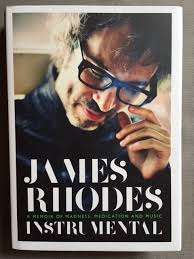
Sexual abuse, previously disregarded, is the child protection issue of our time. Rhodes’ rapist, a school boxing coach named Peter Lee, was traced to Margate and charged in 2015 but died of a stroke before he could stand trial. Some people have all the luck. Not long ago, friends of ours were raided by the Metropolitan Police, who impounded laptops and computer storage devices on suspicion of paedophile activity. The couple had neglected to secure their wireless network with a password but still the police needed to make sure that the modem had indeed been “compromised”. After eight weeks, the computers came back with no evidence on them of child pornography. In all likelihood a perfect stranger – a man like Peter Lee – had parked his car outside their house and, using a very smart phone, hacked into their wi-fi system.
It seems extraordinary that no one thought to question the schoolboy Rhodes when he expressed fear at attending boxing classes, or when blood was seen to run down his legs. For five years the appalling assaults continued. Rhodes describes them unflinchingly and with a proper retrospective fury. His former wife tried to prevent publication of Instrumental on the grounds that their 12-year old autistic son might be “psychologically harmed” by the graphic detail. Last month the Supreme Court lifted the injunction, arguing (among other things) that the book would help other “victims” of abuse. Will it?
Maybe it will. At my own boarding school in south London called Brightlands (a misnomer for that dark Victorian-era barracks) the predatory abuse of boys was not uncommon. Any one of us caught masturbating or talking after lights out was made to strip in the bathroom at the end of the corridor, where a sports master (it was always a sports master) called Paddy Costello beat us with a slipper nicknamed ‘The Paddywhack’. It was a shaming punishment that filled me (and still fills me) with impotent perplexity; in some unformulated way I understood that the beatings were a sexual outrage. The school was a feeder for Dulwich College.
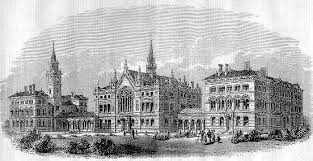
Rhodes’s school in St John’s Wood was a feeder for the no less privileged Harrow (where, he tells us, he befriended Benedict Cumberbatch). The violence done to him as a six-year-old inevitably cast a shadow over his life. He suffered nervous breakdowns, eating disorders, depression, drug and alcohol abuse; more than once he attempted suicide. How much of this was due to his rape, and how much due to the fact that Rhodes is (as he tells us) on the autistic spectrum? We are led to believe that rape was the cause of all his later mental disarray. Instrumental is an angry book, but much of the anger is directed by Rhodes at himself (“I’m a bit of an asshole”). Some readers may weary of what the author calls his “narcissistic” and “whiny” company.
Having gone through AA’s twelve-step alcoholic recovery programme, Rhodes found solace in piano practice, practice, practice. The classical music he champions here is Chopin, Beethoven, Mozart. Great moderns such as Ligeti, Webern or Messiaen are nowhere to be found.
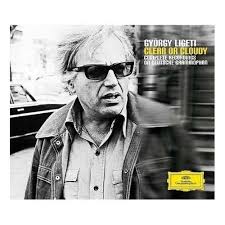
Classical music’s fuddy-duddy image is of concern to Rhodes. Keen to appear right-on, he describes his favourite composers in strenuously street cred terms. Chopin was immersed in a “dysfunctional, fucked-up turd of a relationship” with George Sand; Liszt was a “wanker” (news to me).
During piano recitals, Rhodes likes to wear sneakers and jeans on stage like a younger Nigel Kennedy. For all I care he can wear a gold lamé jockstrap, so long as the music’s tip-top. Rhodes is a brilliant concert pianist but anyone who dares to suggest that he might be a tinsy bit self-righteous in wishing to “save” classical music (the Daily Telegraph’s “douchebag” music critic Michael White, for example,) is aggressively taken down a peg. Editor: where were you?