
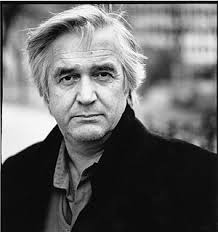
Henning Mankell (1948-2015)
A quarter of a century ago, when Henning Mankell published the first of his Inspector Wallander novels, he could not have imagined how successful they would be. In his native Sweden the series triumphed overnight, and has now sold more than 40 million copies worldwide. (In Germany, where Mankell is the biggest-selling author since the Second World War, the Wallander books outsell Harry Potter.) The late Ruth Rendell, who was half Swedish, read all ten of the novels in the original. She said she admired their edgy, convincing police work and social concerns. “There’s a belief that crime fiction should be about little old ladies solving murders in country villages, but Mankell is modern, and he makes you reflect on society.”

Questions of responsibility and morality – of justice and democracy – are explicitly raised, which is perhaps unusual in detective fiction. “I work in an old tradition that goes back to the ancient Greeks,” Mankell told me. “You hold a mirror to crime to see what’s happening in society. I could never write a crime story just for the sake of it, because I always want to talk about certain things in society.” He said the best crime story he has ever read was Shakespeare’s Macbeth – “a terrible allegory about the corrupting tendency of power.”

I met Mankell, who died of cancer on 5 October, aged 67, on three occasions: once in Denmark, twice in London. He could appear self-important in person, even prickly. Certainly he had an imposingly dry manner in conversation, and fielded questions professionally. “Henning has a ruthless quality,” his Stockholm publisher, Dan Israel, conceded. “His writing is all that matters to him.” Ohers have been favourably impressed by Mankell in person, among them the British crime writer Minette Walters, who bumped into him in Oslo in 1993 during Norway’s Paaskerkrim (Easter crime) season. “He was thoughtful, dedicated, charming,” she recalled.

Mankell cited John le Carré as another key influence and admired the way he develops George Smiley with each subsequent book. “If you can call le Carré a crime writer, he investigates the contradictions inside man, between men, and between man and society; and I hope to do the same.”
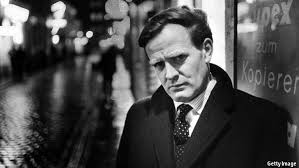
Mankell added: “Sooner or later a crime writer will get the Nobel prize (not me – I’m Swedish) because the old snobbery against the genre is fast vanishing.” In Sweden, the Wallander mysteries are reportedly read by the prime minister and half his cabinet, as well as by the judiciary.
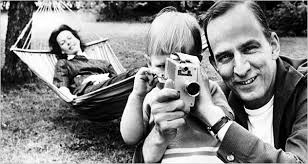
Mankell liked to divide his time between Sweden and Mozambique, where he ran a theatre company. As well as thrillers, he wrote a number of children’s books and novels on African themes. In Sweden one of his most faithful admirers was Ingmar Bergman: Mankell was married to the film director’s daughter, Eva.
Detective fiction from Scandinavia has been fashionable in Britain for some time. The trend was set in 1994 with Peter Høeg’s Miss Smilla’s Feeling for Snow. This Danish thriller radiated an unfamiliar polar chill, but it was Mankell who truly opened the door for Nordic crime.

Mankell was followed into English translation by other Scandinavian thriller writers such as Karin Fossum and, notably, Stieg Larsson. For years, literary detection has been drifting to chillier parts. Marcel Berlins, the author and legal commentator, said: “If you think about it, these Scandinavian whodunits are really quite British. Of course there’s something new and strange in them for Anglo-Saxon readers, but they’re also curiously, comfortingly familiar. The morose and grumpy Wallander is a sort of Baltic Inspector Rebus. And the flat, monotonous landscapes in these euro-thrillers remind one of Norfolk.”
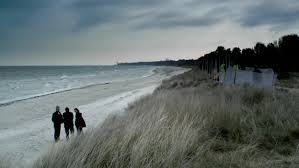
Kurt Wallander remains one of the most impressive and credible creations of crime fiction today. Mankell portrayed him as a sternly pensive slogger with health problems. From his first appearance in Faceless Killers, published in Sweden in 1991, the fortysomething detective is in a bad way. He eats too many take-aways and has put on seven kilos in the three months since his wife Mona left him. He has been stopped by his colleagues for drink-driving, and his grown-up daughter Linda has attempted suicide. If that is not enough, Wallander’s 80-year-old father (a landscape painter with “7,000 sunsets” to his name) appears to be declining into dementia.