
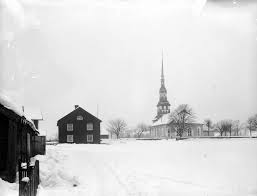
Clearly the move to Härjedalen was a watershed for Mankell, though he was barely two at the time. Gossip about his “cuckolded” father spread quickly in Sveg, the village where he worked. “At school on Mother’s Day we children were supposed to write letters to our mother, but we didn’t have a mother, so we had to write to our grandmother instead. It made me feel a little awkward,” recalled Helena Mankell. Grandmother Mankell was vital to Henning’s formation as a writer; a widow, she had been invited to live with the family in Sveg and it was she who taught Henning to write. Mankell described his excitement at forming his first words: “I was six at the time and can still remember the miracle that I could make a sentence, then more sentences, telling a story.” He added: “The first thing I wrote was a one-page summary of Robinson Crusoe , and I’m so sad I don’t have it any more: it was the moment I became an author.”

Though cold and remote, in many ways Härjedalen was a “wonderful place” in which to grow up, said Mankell, and he looked back on those dark winter days as among the happiest of his childhood. The Mankell siblings lived in a flat above the law courts where their father was judge. Court was in session each Monday, and the children had to be quiet, though occasionally they were allowed in to watch.

One day an orderly hurried upstairs to ask little Henning if he could borrow his toy cars. They were needed to demonstrate how a traffic accident had occurred, and Mankell was thrilled to be able to help. Another time, the children’s school holidays were prolonged as their father investigated a local murder. “Ever since I was a child I have been interested in the justice system and how it works,” Mankell remarked.
Mankell spoke of his father as a “kind, strong man”, whose first love was not for the law or crime-solving, but music. Ivar Mankell’s ancestors had emigrated to Sweden in the 1700s from the border area between Germany and Denmark. “They were musicians by profession, church organists and violin players,” said Henning Mankell.
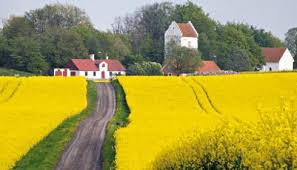
Ivar’s father, also called Henning (1868-1930), was a composer, and Ivar founded a concert society in Sveg in his honour: it offered an opportunity for the province to see classical music performed. His philanthropy was typical of Stockholm’s moderately progressive bourgeoisie, and not surprisingly his son’s books are filled with musical references. Inspector Wallander listens to Maria Callas on the squad car radio and longs to see Berg’s atonal masterwork Wozzeck. Mankell is a fan of Miles Davis and Charlie Parker as well as opera. “Sometimes I wish I could write the way Parker plays,” he said.
During his 10 years in Härjeladen Mankell read voraciously. Mungo Park and the African explorers were a “revelation”; the logs that floated down the river behind the Mankell house, he told himself, were crocodiles in the Congo.
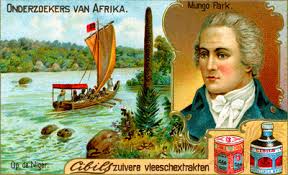
Mankell commented: “Africa was the most exotic place I could conceive of – the end of the world – and I knew I would go there one day.” He learned that the imagination could be an instrument, not just of creativity, but of survival. “In my mind I created another mother for myself to replace the one who had gone.” This imaginary mother, he said, helped him overcome the “crisis of life” and his sense of isolation. “And I think that was me at my best, when the forces of the imagination had the same value as the real world.”

In 1961, Judge Mankell moved his family south to Borås, near Gothenburg, where Henning attended secondary school. He was soon bored with the curriculum, however, and left school at 16 to become a merchant seaman. His father, though disappointed, was sympathetic to his son’s restless spirit. It was 1964, and for two years Mankell worked as a stevedore on a Swedish ship ferrying coal and iron ore to Europe and America. He loved the ship’s “decent, hard-working” community and considered his time at sea his “real university”. He said: “It was a romantic, Conradian dream of escape, though there were long, boring times, too.” Mankell visited Middlesbrough 25 times and Bristol 15 times while on shore leave.