

Patricia Highsmith, the queen of the psychological suspense novel, was unabashedly gay. She did occasionally have sex with men (on one occasion, disastrously, with Arthur Koestler) but her real chief pleasure in life was sex with women. The Price of Salt, the semi-autobiographical lesbian love story Highsmith published in 1952 under the pseudonym Claire Morgan and later re-issued as Carol, bristles with same-sex intrigue and secrecy. Of her 21 novels, it is the only one not to feature a corpse.
Born in Texas a century ago this year, Highsmith was a ferocious malcontent, who drank herself to an early death at the age of 74. Her five Ripley thrillers – the so-called “Ripliad” – are among the darkest and most disturbing books ever written. Tom Ripley, the smooth-talking psychopath, is at times almost endearing as he goes about his business of garrotting and bludgeoning.
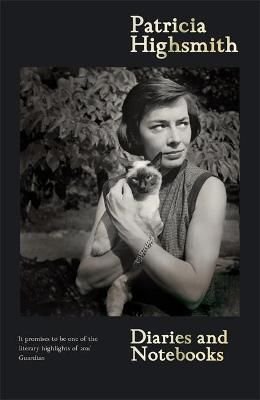
A new book, Patricia Highsmith: Diaries and Notebooks, opens a window onto this extraordinary writer’s inner life and working methods. It has been condensed from some 8,000 pages of material contained in fifty-six previously unpublished journals. The book is still, at nearly 1,000 pages, heavy as a house brick and, it must be said, relentlessly self-absorbed in tone (“I am sick of thinking about myself and about my own problems”, Highsmith finally confides on page 943.) But there is enough here to keep us entertained as well as appalled. Highsmith disliked in equal measure Jews, African Americans, Roman Catholics and “pansy” gay men. Like the deviant Ripley, she was in fact a casebook of neuroses. Her regular outbursts of anti-Semitism (“Jews – why do I consistently find some fault in them?”) show what a committed hater she could be.
Judiciously edited by Anna von Planta, Highsmith’s longtime editor, the book covers half a century from 1941 to Highsmith’s death (in Swiss tax exile) in 1995. Some of the diaries were kept in French, German, pidgin Spanish or Italian as Highsmith was keen to learn these languages – and no doubt deter prying eyes. From Italy to Mexico, she travelled relentlessly, noting down all she saw and heard. (“Rome by night: moonlight on the gray-white side of a church steeple.”) Along the way, we meet Truman Capote, Carson McCullers, Dylan Thomas, Wim Wenders and Jeanne Moreau. In 1946, while working as a comic book script-writer, Highsmith discovered a new hobby: collecting and breeding snails. She kept a colony of pet snails on a head of lettuce in her handbag and was upset when one of them died (“My oldest snail died today”.) Published to coincide with the 100th centenary of Highsmith’s birth in 1921, Diaries and Notebooks is a welcome addition to the work of a most eccentric genius.
This article first appeared in the London Evening Standard on 16 November 2021