
Last night in London I went to see a new play, Black Spartacus, about the Haitian slave leader and national hero Toussaint L’Ouverture, who defeated Britain, France and Spain to create a country free from slavery. The author, Anthony Maddalena, had told the story well; it is a story worth telling.
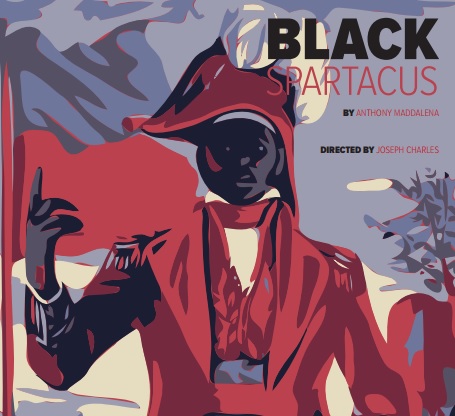
This is the story.
In January 1804, over two centuries years ago, the West Indian island of Saint Domingue became the world’s first black republic. The African slaves toiling on the sugar plantations overthrew their French masters and declared independence. Following the revolt, the name Saint Domingue was replaced by the aboriginal Indian word Haiti (meaning “mountainous land”) and the Haitian flag created when the white band was ripped from the French tricolour.
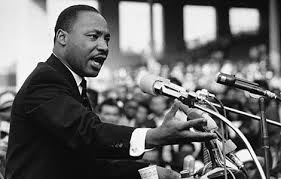
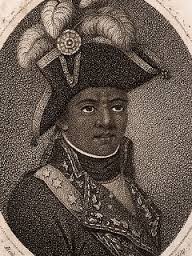
A gifted military strategist, Toussaint L’Ouverture fought and defeated the three mighty empires of France, Britain and Spain to transform Haiti into a cradle of liberty for enslaved Africans everywhere. This was half a century before the American civil war liberated the slaves of the United States. The travel writer Patrick Leigh Fermor hailed L’Ouverture as the “black Spartacus” after the slave who challenged Rome; for others he is a herald of Marcus Garvey and Martin Luther King.
No portraits of L’Ouverture were drawn from life, so we have little idea of what he looked like. Today, despite his historical legacy, he is barely recognised in the west. Yet he was the subject of many books and poems from his death in 1803 until the 19th century’s end. For the Romantics, L’Ouverture was the morning star of a new era for the Americas and an emblem of slavery’s hoped-for abolition.
In 1935, in Harlem, Orson Welles staged an African version of Macbeth in which Macduff was portrayed as a princely L’Ouverture. The Cuban writer Alejo Carpentier, in his dazzling novel, The Kingdom of this World (1949), celebrated him as the father of African emancipation. And in the 1970s the rock band Santana dedicated half a triple album to L’Ouverture.

But these tributes pale beside the work of the great Trinidad-born cricket commentator and historian CLR James, whose pioneering account of L’Ouverture and his rebel armies, The Black Jacobins (1938), showed how the struggle among European powers to dominate the new world was mirrored in L’Ouverture’s Saint Domingue.

According to James, L’Ouverture was born in northern Haiti in 1743 as the grandson of a captured African chieftain. A slave until he was 45, he rode his horse so well, he was known as the centaur of the savannahs. In early childhood he had taught himself to read and was familiar with Caesar’s military writings as well as the polemics of the French abolitionist Abbé Reynal.

Like many Haitians today, L’Ouverture was a Vodouisant or adept of Vodou, a peaceable creed that marries Catholicism with African animism. Most historians agree that Haiti’s slaves first rose up in rebellion under a Jamaican voodoo priest named Boukman. On the night of August 15 1791, Boukman called on the spirits of ancestral Africa to punish the plantocracy. L’Ouverture was said to have taken part in this ceremony and within six weeks the island’s rebel slave armies had begun their 12-year struggle for freedom; that night, a thousand French whites were reportedly massacred and their plantations set ablaze.


L’Ouverture led the only successful slave revolt in modern history. What made it possible? The French Revolution of 1789-91 had proclaimed equality among all men; slavery was now an intolerable injury to human nature, and in 1794 the National Assembly in Paris ordered the French in colonial Saint Domingue to liberate their slaves. They refused: Haiti was too valuable. L’Ouverture vowed to defeat the enemies of the new French Republic, but encountered fierce resistance. The prospect of a free black state founded on the murder and expulsion of its white community horrified these French colonials as surely as it did all the western world. It was not until 1862 that the US recognised Haiti’s independence.