Aldous Huxley, the English novelist, essayist and, in later life, mystic, reported his first psychedelic experience in The Doors of Perception (1954), a bewitching little volume that soon became the Newest Testament among the happening people. One spring morning in 1953 the 58-year-old Old Etonian ingested four-tenths of a gram of mescalin in his Hollywood garden and waited for the visionary moment. When he opened his eyes he saw pure California neon dust. ‘I was seeing what Adam had seen on the morning of his own creation.’

Evelyn Waugh was not alone in thinking that Huxley had gone bonkers in his American exile. (‘Huxley has done more than change climate and diet.’)
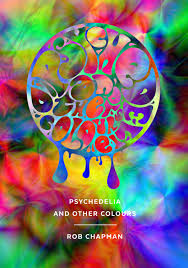
Huxley had been introduced to psychedelic drugs by the English psychiatrist Dr Humphry Osmond, a pioneer in the use of mescalin in the treatment of alcoholics (Cary Grant, among others, was prescribed LSD for his drink problem). As Rob Chapman relates in his new, encyclopaedic history of LSD and its cultural ramifications, Psychedelia and Other Colours, it was Dr Osmond who, in 1957, coined the word ‘psychodelic’ (mind-opening). This was later amended to ‘psychedelic’ in an effort to remove the psychotic connotations of LSD for which the cranky, drug-legalising Harvard professor Timothy Leary was partly responsible.
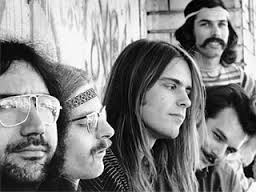
In 1969, the story goes, the ‘alternative snake-oil salesman’ Dr Leary telephoned Huxley’s Italian widow in Los Angeles to say that the Grateful Dead had arrived at the airport and would she put the band up? A concert violinist, Laura Huxley had never heard of the freaky rock‘n’rollers. (‘We should be grateful to be alive, not dead,’ she told Leary.) The Dead were set to descend with their fuzzboxes and feedback, but Mrs Huxley shooed them away.
Her husband would not have cared for the Dead’s weird sound, preferring instead Renaissance madrigals. Timothy Leary’s messianic clarion-call to non-conform through LSD consumption was “Turn on, Tune in, Drop out”; Huxley had tried to dissuade him from elevating the use of psycho-active drugs to a mass phenomenon. To no avail; when Leary championed hallucinogens as sexual stimulants, the mysticism gave way to a misty schism, and Huxley broke off all dialogue with him.
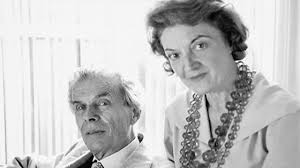
Between 1953 and his death in 1963, Huxley took acid some ten or 12 times only. Broadly, his credo was that LSD might provide us with a necessary benediction, a breathing space. There will always be a human need, he believed, for “frequent chemical vacations from intolerable selfhood.” His psycho-chemical expeditions were self-experiment in the name of science, yet Huxley was credited with setting in motion an international psychedelic movement causing the mental derangement of millions of people. Jim Morrison and his humourless California band the Doors named themselves after The Doors of Perception; the Beatles included Huxley’s photograph on their Sergeant Pepper album sleeve. Whether he liked it or not, Huxley was hip.

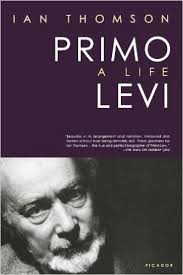
Reading Chapman’s book, I was reminded of my encounter with Huxley’s widow at her home in Los Angeles; the meeting took place two decades ago in the spring of 1994, when I was researching my biography of Primo Levi (himself a Turinese). I hadn’t realised that Aldous Huxley’s second wife was Italian, or that she was still alive. Then I made an interesting connection: Laura had not only been to the same secondary school as Levi in Turin, she had also lived in the same Turin block of flats on Corso Re Umberto. After several interviews, Levi’s sister unexpectedly said to me: “Now may I tell you something? A brilliant violinist, a girl, had lived on the third floor opposite me and Primo. Later she married Owldus Ooxley.” The Italian pronunciation threw me at first. “Who?” Then it dawned on me.