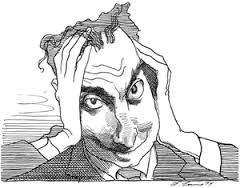
On 19 September 1985, thirty years ago, Italo Calvino died at his home in Tuscany of a cerebral haemorrhage. Many Italians felt they had lost a literary friend. Messages of condolence came from the Vatican and the President of the Republic. Umberto Eco’s front page obituary in the Corriere della Sera almost overshadowed news of the Mexican earthquake. In the same paper, John Updike lamented that “world literature had been deprived of its most refined and civil voice.” Reportedly, Calvino had planned to write 14 more books; he was 62.
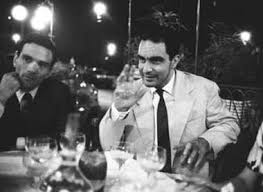
Three decades on, the Italian fabulist still has his detractors. Calvino’s books are of great formal brilliance, they say, but of negligible importance – a mere pomp of words. Calvino’s best known work, the 1950s novel trilogy Our Ancestors, offers surrealist tales of a cloven viscount, a non-existent knight and a baron in the trees. In Italy, the trilogy is sometimes classified as an allegory for children; can this be serious literature? The British, especially, are wary of writing which flaunts its own cleverness. Yet Our Ancestors has been interpreted as a satire on the divisions of the Cold War and a treatise in defence of freedom of speech. Like Edmund Spenser in The Fairie Queene, Calvino transfigured current affairs into allegory. His mastery of the Italian language, moreover, was exemplary.

Calvino was conspicuous among European intellectuals for his refusal to be glum. Cosmicomics (1965), a collection of minimalist fables concerning the origin of Planet Earth, is narrated by a one-cell organism called Qfwfq, who lives in the first protozoan and in all later forms of evolution from mollusc to man. A marvelous gallimaufry of the funny and the fabulist, the fables might have been written by Edward Lear, had he been catapulted into the Space Age. Calvino stole from a variety of literary sources; Laurence Sterne’s crack-brained 18th century novel Tristram Shandy was especially close to his heart. Indeed, Sterne foreshadowed an abiding concern of his: the adventure of writing stories, not stories that tell of adventures.

Much of Calvino’s allegorical whimsy incorporates cock-and-bull digressions on the nature of story-telling. If On a Winter’s Night a Traveller (1979), an example of late Calvino, is composed of ten half-finished novels, each dizzyingly contained within another like a Chinese box. In one of these, a couple of crooks drive round Paris as they try to eject a loudly farting corpse from their car; it is a spoof of an early Jean Luc Godard film.

In many ways, however, Calvino was a curiously old-fashioned writer. His novels, essays and short stories resonate within a tradition of the Italian Enlightenment, from Manzoni’s The Betrothed to Collodi’s Pinocchio, and remain eminently readable. During his fifteen-year exile in Paris until 1979, Calvino met Alain Robbe-Grillet, Michel Butor, Claude Simon and other French nouveau romanciers, whose tricksy narrative devices and ratiocinations were certainly an influence. Yet Calvino differed from these humourless practitioners of the so-called “anti-novel” because his literary aims had more to do with the recovery of the folk-tale than with radical innovation. A fiction without any trace of a story, Calvino always maintained, was not worth its weight in paper.
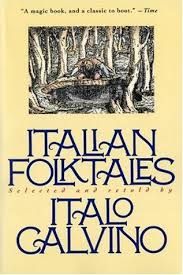
Time and again, Calvino insisted on the “educational potential” of the fable and its function as a moral exemplum. If fiction is unable to exert a direct influence on the affairs of the world, perhaps – like a folktale – it can serve as a “teaching device”. Not that Calvino was drawn to the folk imagination in deference to any ethnic tradition. “Who gives a damn about customs?” he wrote in 1957 to his friend the Sicilian thriller writer Leonardo Sciascia. This was the year Calvino published his now classic anthology of Italian Folktales, Italy’s answer to the Brothers Grimm and the fruit of heroic research.