
Alfred Hitchcock was born in London in 1899 to devoutly Catholic parents, who reportedly instilled in him a fear of punishment and authority. For a trifling misdemeanor, the story goes, the boy Alfred was locked up at his father’s own request in a police cell. His most distinguished biographer, Donald Spoto, claimed that the “Master of Suspense” rejected religion in the late 1970s as death approached. Nevertheless, in Catholicism Hitchcock had found a sense of melodrama – an atmosphere of good and evil – that served him well as a film-maker.

In his brief biography, Alfred Hitchcock (Chatto & Windus), Peter Ackroyd highlights Hitchcock’s Jesuitical secondary school education in north London. From the Jesuits the director believed he had learned the virtues of order, control and precision as well as, no doubt, a strong sense of fear. The anxious Catholic priest played by an alcoholic Montgomery Clift in Hitchcock’s noirish masterpiece I Confess (1953), is blackmailed into keeping silent about a murder, yet, as a Catholic, he fears damnation, and Hitchcock establishes our empathy for him. Graham Greene, a fellow Catholic, was asked to write the script for the film, but he turned Hitchcock down.
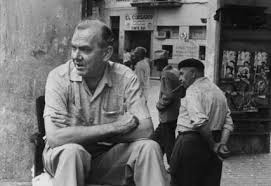
Greene’s aversion to Hitchcock is well-known, but Ackroyd oddly makes nothing of it. Greene shared with Hitchcock a taste for sinister jeopardy and suspense in dowdy, broken-down locations, as well as a love of espionage thrillers in the John Buchan mould. In 1958, Hitchcock tried without success to acquire the film rights to Greene’s espionage “entertainment” Our Man in Havana; but, again, he was snubbed.
Hitchcock’s third production, The Lodger, was in many ways his first true film. Released in 1926, it starred the matinee idol Ivor Novello as a Jack the Ripper-like murder suspect and saw Hitchcock in his debut ‘cameo’ role. Hitchcock did not want his audience to think, says Ackroyd, but to “bludgeon” and “titillate” them with suspense. Vital to the film’s success was the director’s future wife Alma Reville, the “doyenne of the cutting room”, and a no-nonsense assistant on set. Hitchcock later said, half jokingly, that he would have become homosexual had he not met Alma. In the director’s dandified manner and keen interest in women’s couture Ackroyd nevertheless detects an undertow of near-Wildean campery.
As a Londoner himself, Ackroyd co-opts Hitchcock into a tradition of metropolitan “cockney visionaries” that stretches back to Charles Dickens. The director’s lugubrious delivery in his hugely popular 1950s and early 1960s television series Alfred Hitchcock Presents suggests a London music hall comedy routine. Hitchcock’s off-colour jokes to camera (“I was once arrested for indecent exposure when I removed a Halloween mask”) have an edge of macabre sauciness. Hitchcock once said that if he made a film out of Cinderella, a corpse would have to roll out of the fairy tale coach.

Ackroyd reminds us that “Hitch” was often described (not always flatteringly) as an artist of the surface; Dial M for Murder, Rear Window, North By Northwest and other great works of the 1950s radiate a “vivid unreality” and glazed elegance in the image-making that is pure mannered cinema. His leading actresses were all idealized, Madonna-like fantasy constructs; Grace Kelly was perhaps associated in his mind with the Catholic ‘light of grace’ from his Jesuit schooldays in suburban Stamford Hill, Ackroyd suggests, while Janet Leigh in Psycho (1960) radiates a tremulous if sexually knowing beauty.
For all its insight, Peter Ackroyd’s is a deft synthesis of numerous other biographies of “Alfred the Great”; it is well-written, however, and unusually well attuned to the religious element. Over the half century of his film-making career, Hitchcock created characters who try to hide their weaknesses from the world and themselves. He was, like Greene, a Catholic excited by human turpitude and evil. Pointedly, his great 1958 film Vertigo ends with words spoken by a nun: “I heard voices. God have mercy.”