
Back in the 1970s, I went to the same school in south London as a stockbroker’s son called Nigel Farage. He was not much liked by the Dulwich College staff, who found him cocky and opinionated. My English teacher Chloe Deakin objected in a letter to the head (dated 4 June 1981) that the future Ukip leader “publicly professed racist and neo-fascist views”; with a group of school army cadets he had “marched through a quiet Sussex village very late at night shouting Hitler Youth songs.” On no account should this goose-stepping liability be made a school prefect.* Perhaps we should put this behaviour down to cheekiness and rudeness (like the mock-up poster below). What a schoolboy got up to thirty years ago is not relevant to us today, is it? Is it?

Yasmin Alibhai-Brown, an Independent newspaper columnist, is no fan of Farage, it is safe to say. Her new book, Exotic England: The Making of a Curious Nation (Portobello), is a hosanna to mixed-up, mixed-race Britain and its long and noble tradition of sheltering refugees and casualties of totalitarian regimes. Born to Shia Muslim parents in Uganda in 1949, the author was exiled with her family to England in 1972 by Idi Amin. The Tory prime minister Ted Heath (one of Alibhai-Brown’s heroes) welcomed Ugandan Asians to Britain; Amin had inflicted a murderous racism on his country’s Asian community.
Oddly, Africa and the black West Indies feature only sketchily in Exotic England: the “exotic” in the book’s title refers chiefly to the Asian subcontinent’s influence. In terms of food, architecture, literature and loan words (“shampoo”, “pundit”, “bungalow”), this has been incalculable, says Alibhai-Brown. Her book is brimful of curious facts regarding British mosques, imperial British explorers, British curry dishes and other products of Asian immigrant hybridity and cultural displacement.
Post-war Britain grew strong and rich by opening up to India and Pakistan. Enoch Powell, the Tory health minister between 1960 and 1963, invited Commonwealth citizens to come and work in the NHS, and thousands responded. By the late Sixties, of course, Powell was railing “against coloured immigrants”, but he was not quite (or not always) the racist that Alibhai-Brown portrays here.
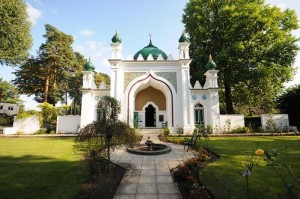
Exotic England has much of interest to say on Victorian London’s regard for the aesthetics and essence of Islam. Woking mosque, completed in 1889, was one of the first to be built in western Europe, we learn. Queen Victoria’s Muslim servants prayed there and she took a “keen interest” herself in their faith. (“Incredible, really”, says Alibhai-Brown, given the levels of Islamophobia in Britain today.)
It is only a pity that Alibhai-Brown writes so dreadfully. “Ideas and visions, traditional and modern, are added to and fermenting in the pot, bubbling away”, she comments of the multi-shaded, multi-ethnic Britain of today, adding: “Sweet and stinging aromas waft out. Smoke gets into the eyes. I still don’t know what this new England will be.” Clichés cling like grime to the prose (“curry favour”, “wanton tyranny”, “sweetness and light”).
All the same, Exotic England is a useful guide to the vagaries of 21st century Britain. The country now has the highest number of “mixed-race couplings” in the Western world, Alibhai-Brown says approvingly. Diversity is here to stay, and most of us like it that way. Only the most asinine British nationalist or Ukip supporter would object (for example) to the availability in our corner shops of Caribbean pepper sauce, Polish beer or Indian spices.
Bidisha, a second generation British Asian author with a celebrity-like mono-moniker (Adele, Sting, Prince), is interested in gender and immigration studies. Asylum and Exile: The Hidden Voices of London (Seagull), a record of her teaching work in the British capital with refugees and asylum seekers, is a timely if sometimes comically over-written book of reportage. (“He has a high, airy, twittering voice, sibilant and sad, like a dying tin whistle”, we read of an Iranian musician). The refugees in Bidisha’s classroom have lost everything – their nationality, their home – yet a stereotype persists of welfare malingerers, scufflers and chancers.