
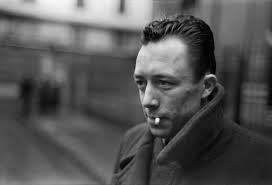

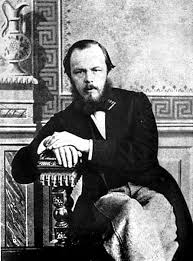
Moravia had read Dostoevsky as a teenager in 1920s Rome under the supervision of his French governess. (“I dostoyevkyized my life”, he remembered.) In his view, Dostoevsky’s characters are unable to escape the state of anguished impotence in which they find themselves. The impossibility of action is a theme that runs like the black line in a lobster through The Brothers Karamozov and Crime and Punishment. Nothing – no inkling of anger, or rage, or hatred – has the power to shake Moravia’s own existentially bored characters. Whenever the opportunity for action presents itself, the feckless Michele of Gli indifferenti feels inert and leaden: “For him, faith, sincerity, a sense of the tragic no longer existed; everything, seen through the veil of boredom, appeared pitiful.”

Readers were first introduced to boredom in Moravia’s 1928 short story, ‘Crime at the Tennis Club’, where the offspring of wealthy Romans are unable resist even the most degrading of experiences in order to alleviate the tedium of their lives. (Moravia spoke of the characters’ “Dostoevskian existentialism.”) An equally important influence on the young Moravia was André Gide, whose 1914 novel Les Caves du Vatican hinges on a gratuitous, unmotivated crime. A young man pushes a passenger out of a speeding train simply in order to act (or perhaps to alleviate boredom). The motiveless gesture was to haunt 20th century literature. Camus could not have written The Outsider, nor Paul Bowles his Moroccan novels or Moravia his tales of upper middle-class anxiety, without Gide’s example.

In his high moral seriousness and sour intelligence, Moravia was a Gidean-Dostoevskian literary outsider. His celebrated novel Il disprezzo (1954, Contempt) grew out of his tortuous and at times murderous marriage to the Italian novelist Elsa Morante.
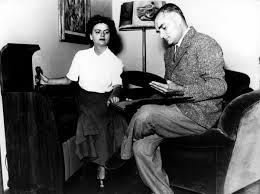
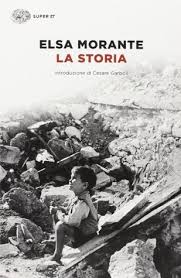
“There were days when I wanted to kill her”, Moravia confessed in a late interview. “Not to split up, which would have been the reasonable solution, but to kill her.” As a novelist, Moravia was concerned with psychologically abnormal, unhappy, diseased, thwarted or unpleasant people (among them, perhaps, himself). His books are psycho-dramas masquerading as novels. None of them contains more than five characters; Moravia was not a writer like Elsa Morante, whose fiction (pre-eminently, History: A Novel) proliferates with familial relationships.
An unsmiling, cantankerous presence, Moravia was most at home in describing the privileged Roman world into which he was born in 1907. His father, Carlo Pincherle, was a Jewish Venetian architect; his mother, Teresa Iginia de Marsanich, was a Catholic-born countess of Slavic-Dalmatian extraction. His parents had a box at the Rome opera as well as a chauffeur, but to their son Alberto these were meaningless bourgeois trappings. “The Roman society with which my parents were trying to mingle appeared to me simply horrible, even before I could understand the reasons for my revulsion”, Moravia recalled.
After publication in 1935 of his disappointing second novel Le ambizioni sbagliate (Mistaken Ambitions), Moravia avoided Fascist pressures and dragnets by travelling widely abroad. The Italian reporter and author Curzio Malaparte, editor of the Turin daily La Stampa, sent Moravia as a journalist to London, where he met Lady Ottoline Morrell and others in the then almost defunct Bloomsbury set. (Malaparte, who later chronicled with scrupulous and unsparing lucidity the horrors of the Russian and Finnish fronts, greatly impressed Moravia.)

Moravia was resident in Florence when, in 1937, news reached him that two Italian men had been found murdered on a roadside in Normandy. They were well-dressed and, the police surmised, in their early 40s. The men were identified as the brothers Carlo and Nello Rosselli, Italian Jews who had been executed by Mussolini’s agents. (Their carotid arteries had been severed.) Moravia was mortified: the Rossellis were his cousins.