
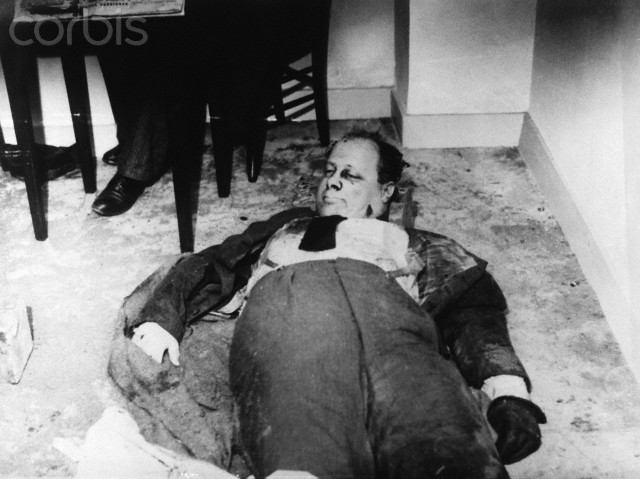
At a stroke, Italy had been deprived of its two most courageous anti-Fascists. Although Moravia had dismissed Fascism as a “very boring” movement, he had undertaken dangerous clandestine work on behalf of Carlo Rosselli, who in 1929 had founded Italy’s Justice and Liberty movement, then the gravest threat to Mussolini in the country. Moravia was now a marked man. During Mussolini’s anti-Semitic racial laws of 1938 he was singled out for abuse in the Fascist press. Born Alberto Pincherle, Moravia was Jewish only on his father’s side, yet the Rome-based Fascist journal Il Tevere gloatingly referred to “that Jew Pincherle”. Afterwards Moravia developed spasmophilia, a form of nervous colitis, and began to fight acrimoniously with his future wife Elsa Morante.
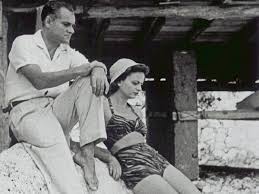
The story of the Rosselli brothers’ murder was told by Moravia in his acutely disturbing novel Il conformist (1951, The Conformist). Moravia narrated the story from the point of view of the assassin, an unsavoury man so fearful of his homosexual and sadistic tendencies that he masks them by becoming a Fascist police informer. Bernardo Bertolucci’s 1970 film of the novel, starring Jean-Louis Trintignant, won Moravia a new young readership and confirmed him as a non-conformist literary spirit and saboteur.


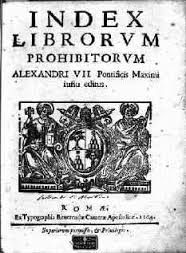
In 1952, reportedly to his delight, Moravia was put on the Vatican Index of Forbidden Books along with André Gide. A passage in La noia had incurred the Holy See’s displeasure. “In the beginning was boredom, commonly called chaos. God, bored with boredom, created the sky, the waters, the animals, the plants, Adam and Eve…” Although the Index was discontinued in the mid-1960s following the liberalizing reforms set in motion by the Second Vatican Council, Moravia was rarely afforded a good notice in the Vatican newspaper L’Osservatore Romano.
To the Vatican’s disapproval, conjugal love or fidelity play no part in his fiction. Sex is never a confession of warmth or affection in Moravia, but rather of man’s inability to love. His characters indulge in sex because it is often the only form of social intercourse available to them (or else it serves to mollify the “distasteful trivialities”, as Moravia called them, of “everyday existence”). In La noia, comically, copulation is seen as a physical penance for which the human body is singularly ill-suited: “The very confirmation of the two sexual organs, the female organ difficult of access, the male unable to reach its goal autonomously like an arm of leg, but needing, rather, to be aided by the whole body, seemed to me to indicate the absurd banality of sexual intercourse.” The starkly worded sentiment is typical of Moravia and his blunt openness regarding sex.

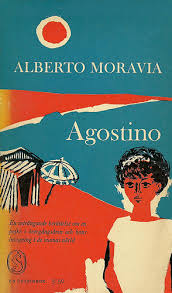
Over the sixty years of his writing career, Moravia depicted the sexual dysfunction and ennui of the neurotic well-to-do, rather than the possibility of self-renewal and regeneration for anyone else. His stylistically brilliant novella Agostino, written over a single hot summer in 1942, concerns “a rich bourgeois boy” who discovers sex and class distinctions after making love to a prostitute for the first time. Moments of hope are non-existent in Agostino.
A rare note of optimism is sounded in Moravia’s novel La ciociara (1958, Two Women), about a middle-aged Roman widow, Cesira, and her daughter after they are forced to flee Rome after the Allied aerial bombardments of 1943. Cesira finds in the biblical story of Lazarus an incentive to “the compassion we owe to others and to ourselves.” If Moravia’s books are depressing, we should not be surprised. “Sophocles began it all when he said that it was better for man never to have been born”, Moravia said.