

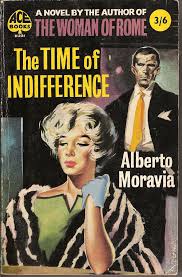
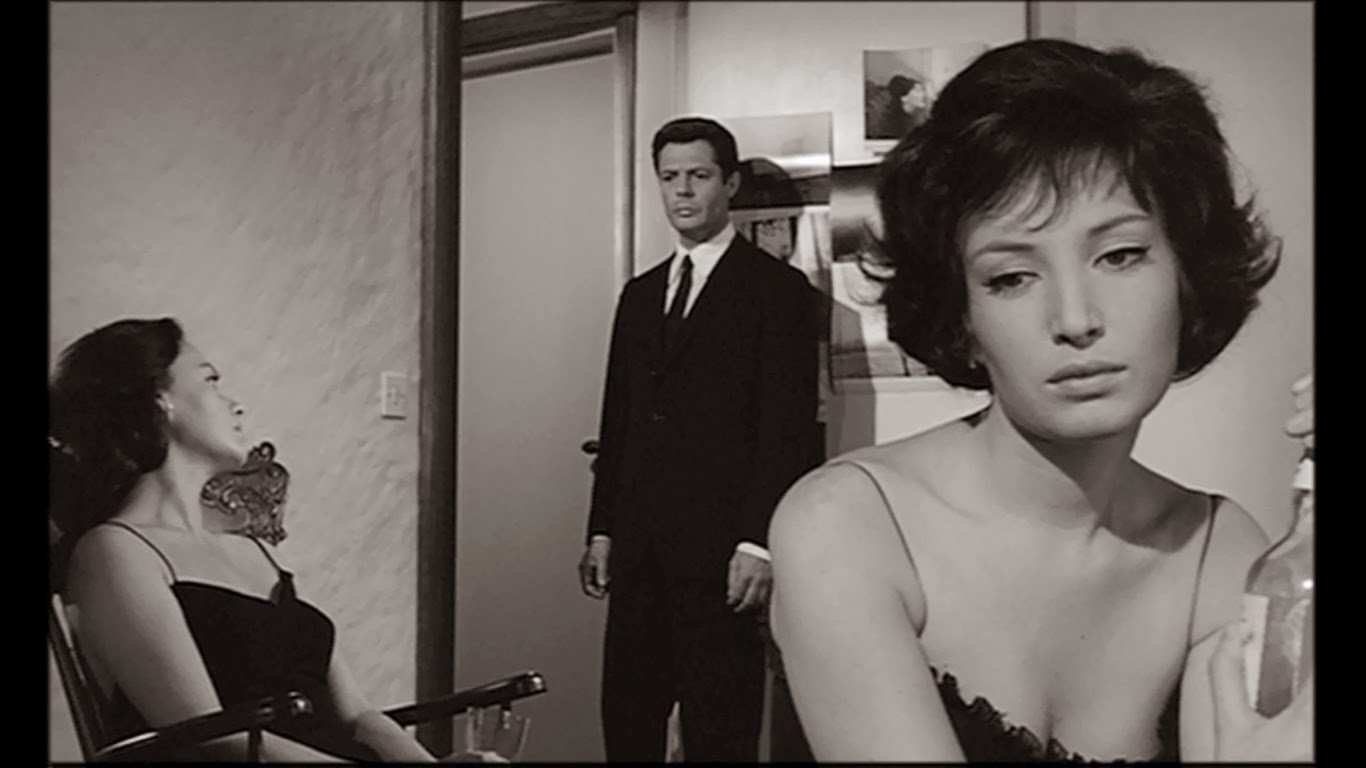
Back in the 1960s and 1970s, Alberto Moravia’s views were canvassed on every subject from pastoral socialism in Mongolia to prostitution on the streets of Rome. He is not much read these days, yet he was one of le grandi firme – “big names” – of postwar Italian literature. He routinely appeared on television to dilate on his abiding literary theme: boredom. His landmark first novel, Gli indifferenti (1929, The Time of Indifference), excoriated boredom as a disease corrupting modern affluent society. “I would say I was born bored”, Moravia said of himself, adding: “In the beginning was boredom.”
I met Moravia in 1984 in his flat in Rome on an overcast afternoon in March. He sat on a white sofa; short, wizened, with a slightly sour expression. His study was sparsely furnished: piles of books, an unopened copy of La Repubblica newspaper, African masks up on the wall, and an in-tray full of the morning’s post on a desk. It was raining, not heavily, but with the carelessness of a leaking basin, and people were hurrying along the banks of the Tiber under umbrellas. At the end of our conversation Moravia announced: “I am a little tired now”, adding: “I hope what I have said has been some use to you.” We shook hands and I left. The evening was black and humid. I imagined Moravia’s study behind me filling with the monotonous sound of dripping water.
Moravia was scarcely seventeen when, in 1925, he wrote Gli indifferenti after recovering in a sanatorium in the Italian Alps from tuberculosis. (The disease had begun in 1917 in mild form, but by 1923 Moravia was at the point of death.) The novel’s portrayal of complacency, indifference and double-dealing in Mussolini’s Italy irked the Fascist authorities; the Duce’s bother condemned Moravia as a “destroyer of every human value”. Moravia’s cynicism and brutally frank attitude to sex turned him overnight into un scrittore scomodo, an “unsettling writer”. His message was clear: bourgeois Roman society was moribund – like a dirty anti-macassar it was in need of a thorough rinsing.
Moravia was the first Italian writer to invest boredom with a sense of existentialist dread. In the 19th century the poet Giacomo Leopardi had spoken of boredom – la noia – in terms of a listless, rather wistful acceptance of man’s lot. Moravia, of a more saturnine temperament, borrowed from the “gangrenous ennui” (as he called it) of Charles Baudelaire to forge his own literature of angst. His debt to the French poet maudit is all the same problematic. Whereas ennui had endowed Baudelaire’s poetry with a paradoxical sense of uplift (“Boredom, the fruit of glum indifference, gains the fruit of eternity”), the boredom endured by Moravia’s characters deepens from novel to novel. Michele, the disgusted anti-hero of Gli indifferenti, was the first in a long line of distinguished Moravian male characters, being a compound of indifference, equivocation, pusillanimity and lassitude.

Moravia’s assault on bourgeois morality was not without its dark humour. The hero of his great mid-period novel La noia (1960, The Empty Canvas on its first English appearance, but more recently Boredom), suffers from an almost comically crippling ennui. Again and again Dino, a well-heeled painter of abstracts, describes boredom as a queasy-making lack of contact with the objects around him. (“Between them and me there was nothing.”) His anxiety infects every kind of object, from the most concrete of all, himself, to the most abstract, the world.
In some ways, Moravia was a forerunner of the French existentialist novel. When he visited Paris in 1946, Jean Paulhan, then the editor of the Nouvelle Revue Française, was reported to have asked him if he had come to see his “sons”… Sartre and Camus. Although Gli indifferenti preceded by nine years Sartre’s La Nausée, and by thirteen Camus’s L’Etranger, Moravia was reluctant to be associated with the French philosopher-authors. “I am first of all a writer, not a thinker”, he insisted. The father of literary existentialism was not Sartre or Camus, according to Moravia, but Fydor Dostoevsky.