
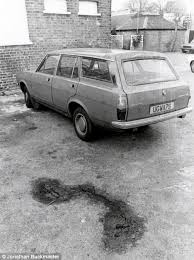
The Daniel Morgan murder has claimed surprisingly little of our attention. With rumours of sexual jealousy and drug-related Scotland Yard corruption, it has the makings of the darkest London thriller. I first heard of the case in 1989, while researching an article about private detectives for the Independent magazine, ‘A Not So Clever Dick’. Morgan, one of Britain’s 10,000 registered private eyes, was reckoned to be an ace shadow man. On the night of 10 March 1987, however, he was killed on leaving the Golden Lion public house, Sydenham Road, south-east London, where he’d been drinking with his business partner Jonathon Rees. Customers discovered the body in the pub car park at about 9.40 pm. An axe was embedded in his face.

Three blows had been delivered with the blade to the back of the detective’s head followed by a final blow to the side. On the blood-puddled asphalt were the keys to Morgan’s silver BMW and two unopened packets of crisps. Morgan, 37, a brawny, mustachioed Welshman, lived in South Norwood with his wife Iris and their two children, Sarah and Daniel. Were he alive now he would be 67.

Three decades on, Morgan’s killer has still not been found and the circumstances surrounding his death remain murky. A new podcast, ‘The Daniel Morgan Murder’, goes on general release this April, however, and the journalist who presents the series, Peter Jukes, hopes that new witnesses may come forward. Jukes had been inspired by the success of the US podcast Serial, which narrates a non-fiction crime story over multiple episodes. “I’d listened to some of Serial and watched the US web televison series ‘Making a Murderer’, and realized that the modern ‘true crime’ series had moved on from the obsession with psychopathy and serial killers to more subtle stories of injustice, prejudice and a malfunctioning criminal justice system”, said Jukes. The ‘Daniel Morgan Murder’, built chiefly round interviews with Alastair Morgan, unfolds in the voice of a courtroom testimonial.
Preliminary enquiries had established that the murder weapon was a £45.00 Chinese-manufacture Diamond Brand chopping axe. Round the handle were two strips of sticking plaster, possibly to afford a better grip or to ensure that no fingerprints were left, or both. ‘The Golden Wonder’ murder (so called because of the crime scene crisps) was to become the “most-investigated unsolved killing in British history”, according to the podcast. Morgan’s £830 Rolex wrist watch was stolen – but £1,100 in a jacket pocket left untouched. Robbery seems an unlikely motive. A contract hit? As a qualified bailiff, Morgan had made enemies from his work in debt collection and vehicle seizure; he snooped on errant spouses and did other, sorry gumshoe stuff. The banknotes were most likely part of an outstanding payment to the detective agency he set up in Thornton Heath, south-west London, in 1984: Southern Investigations.
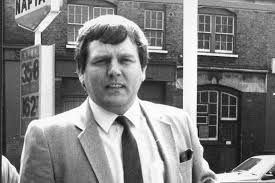
Like many detective agencies, Southern Investigations had a comfortably flexible attitude to the law. Morgan had an illegal link into the Police National Computer (his diary revealed as much); but Jonathon Rees belonged to a much more sleazy end of the business. A big, bluff northerner from Rotherham, Rees would soon make a fortune from selling confidential information to the redtop nationals. Allegedly, Rupert Murdoch’s News of the World paid him more than £150,000 a year for information on, among others, Peter Mandelson, Gary Lineker, Mick Jagger, Eric Clapton and the Lib Dem leader Paddy Ashdown. As a freemason with police associates, Rees was part of a very British story of intrusion, power and criminality. While Rees liked to dine with Met officers at Croydon Masonic Hall, south London, Morgan had a low opinion of the police. “All police are bastards!” he was heard to say shortly before his murder.