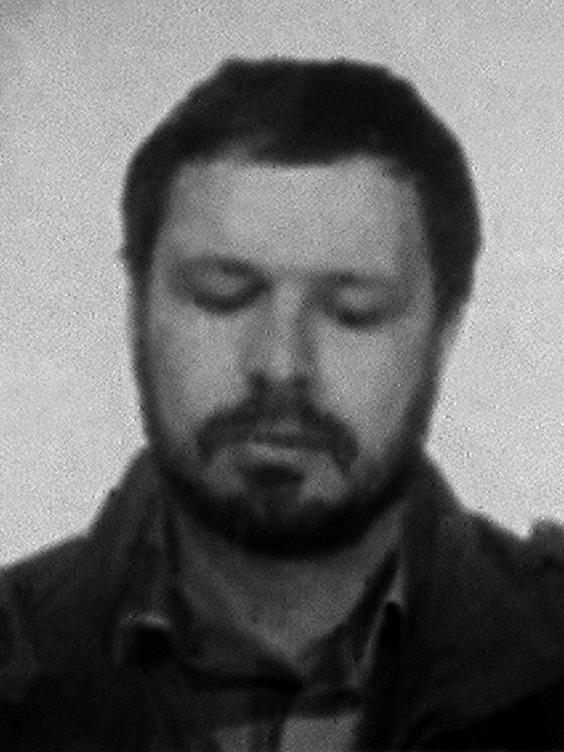
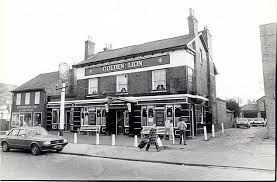
There were few drinkers that night in the Golden Lion; a women’s dart team was in the back. After arguing again with Morgan about the “robbery”, Rees departed at 8.55 pm, leaving his partner to finish some paper work. Goodridge did not turn up. Rees had parked his car in front. As he drove home through the Sydenham night he made or received five calls. One of them lasted twelve minutes. Rees’s wife Sharon was later unable – or perhaps unwilling – to corroborate his claim that the call was made by her and concerned a takeaway meal. (They subsequently divorced.)
At 9.15 pm Morgan walked through the beer garden to the back of the pub, where someone was waiting for him. Joseph O’Brien, the publican, was alerted by a customer: “Joe, I think there’s a body or a dummy out in the car park.” It seemed that a smartly dressed drunk had collapsed beside his BMW. He was wearing one of those joke ties that stick out at right angles. O’Brien phoned for the police and within minutes a squad car arrived followed by an ambulance.

Bizarrely, Sid Fillery of the Catford plain clothes squad was assigned to the case. He interviewed Rees under caution and accompanied him to the mortuary to identify the body. Fillery also took possession of documents from Southern Investigations (among them, Morgan’s diary), but initially failed to disclose to his superiors that he was working part-time for the Thornton Heath agency or that he and Rees were close friends. So the first investigation was corrupted – the Met police subsequently admitted – by the presence of Detective Sergeant Fillery. A month later, in April 1987, Fillery and two other Catford police officers – Detective Constables Alan Purvis and Peter Foley – were arrested and questioned on suspicion of perverting the course of justice. Rees and his brothers-in-law Glen and Gary Vian, part-time security bouncers involved in drug trafficking, were also arrested – on suspicion of murder. After eighteen hours of interrogation, all six men were released without charge.
During the two-week coroner’s inquest held a year later, in April 1988, it was suggested by Julian Nutter, the lawyer representing Rees, that the Golden Lion was frequented by a local drug dealer. “The dealer was known to use a minder who had a frightening tool of the trade – an axe”. Nutter speculated that Morgan was killed after stumbling on – or interfering with – a drugs transaction. The inquest, conducted by Sir Montague (“Monty”) Levine, coroner for Inner South London, again raised concerns of police collusion. Kevin Lennon, the detectives’ accountant, testified that Rees and his Catford Met contacts had arranged a £1,000 contract for Morgan’s murder. (“I’ve got it fixed” Rees told Lennon six months before the murder.) The killing was to be staged within the jurisdiction of Catford; that way, the officers could suppress damaging evidence linking them. The Golden Lion happens to be in the Catford police area. When Rees gave evidence he categorically denied any involvement in the murder.
Lennon, who was serving a prison sentence at the time for tax fraud, testified that Rees had discussed the murder with his wife Sharon. Sharon Rees sent the coroner a note to say that she was mentally unfit to give evidence though the Daily Mirror photographed her the next day out shopping. The inquest also heard from Margaret Harrison, who denied that she was having an affair with Rees at the time Morgan was murdered. Police files were re-opened and more suspects interviewed. But, incredibly, not one strand of forensic evidence was found to implicate anyone. “No blood. No fibres. No fingerprints”, said the coroner, who returned a verdict of unlawful killing.
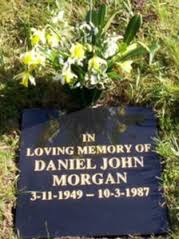
Four months after the inquest, in August 1988, Morgan was buried in Beckenham cemetery in a recuperable coffin: cremation was not an option in case the body had to be exhumed for forensic inquiries. In police parlance, the Morgan case was a ‘sticker’, one that would not be solved.