
In June 1988, however, following a complaint made by the Morgan family to the Home Secretary Douglas Hurd, Hampshire police were called in to open a second inquiry. There was still very little to go on – no fingerprints or other forensic traces – but Jonathon Rees was again arrested and charged on suspicion of murder. Kevin Lennon’s evidence against him (“his mates at the Catford nick were going to do it”) appeared to be damning. Still the evidence could not be corroborated by witnesses and once more Rees was released. By now Fillery had retired from the Met and replaced Daniel Morgan as Rees’s new partner at Southern Investigations.
Why was Morgan killed?
The podcast suggests that Morgan may have been about to expose a case of extensive drug-related South London police corruption implicating Rees, Fillery and other Met officers. Understandably Morgan did not trust the police to investigate but he had influential press contacts (among them, Alastair Campbell at the Mirror) and may have decided to sell his story to the News of the World. By the late 1980s, after Fillery had joined Southern Investigations, the Morgan family had begun to speak openly of a police cover-up. “Daniel had vital information – he had to be silenced”, his mother Isobel Hulsmann said. During a third police enquiry, launched covertly in 1998, Southern Investigations was bugged. Though no evidence was recorded that Rees was involved in murder, he was found to be deep in Fleet Street corruption. The Sunday Mirror wanted him to get inside the bank accounts of Prince Edward and the countess of Wessex.
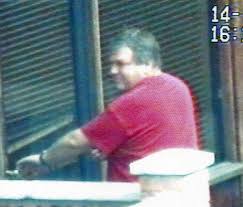
Reporter: “Do you remember a couple of months ago, you got me some details on Edward’s business and Sophie’s businesses and how well they were doing?”
Rees: “Yeah.”
Reporter: “And you did a check on Sophie’s bank account?”
Rees: “Yeah.”
Reporter: “Is it possible to do that again? I’m not exactly sure what they’re after but they seem to be under the impression that, you know, she was in the paper the other day for appearing in Hello magazine. They think she’s had some kind of payment off them.”
Rees. “What? Off Hello?”
Reporter: “Um, yeah.”
Rees: “… find out how much.”
Reporter: “Well, we just want to see if there’s been any change to her bank account.”
In December 2000, Rees was again arrested after bugs picked up a conspiracy hatched by him to plant Class A drugs on a woman in a child custody case. He was sentenced to seven years; the Met officer who aided and abetted him, DC Austin Warnes, got four years. So Daniel Morgan’s former colleague was now behind bars – but not for his murder. The heat was closing in. A new, fourth enquiry was launched in the summer of 2002, and on 26 June Morgan’s mother appealed on BBC TV Crimewatch: “How could I have had my son taken away from me like this? What sort of people do this?… It’s cruel, it’s evil, it’s awful. Daniel harmed nobody.” Her agonised questioning had gone on for fifteen years. “I can’t move on. I want to move on so desperately. I shall soon be 75 and I just would love to have a few years of peace of mind”.
Detective Chief Superintendent David Cook, a courteous, dry-humoured Scot, led the fourth inquiry. I interviewed him on 18 September 2002 at Hendon police headquarters, Aerodrome Road, north-west London. “This is a tremendously interesting story. Interesting beyond belief. Any investigation into Morgan’s death has to begin with the near-certainty that it was a conspiracy and not the work of a lone individual. Not all those involved may have known that Morgan was going to be killed, but they certainly knew something was going to happen.” Solving Morgan’s murder was not just a question of salvaging the Met’s honour, but of bringing “long wished-for peace of mind” to the dead man’s family. Cook had been “delighted” with the Crimewatch response and believed that he had found a “nugget – but whether it’s a 24 carat nugget, we’ll have to see”. The police were offering a £50,000 reward for information.